Since 2023, Georgia’s human rights landscape has undergone a dramatic and accelerating deterioration under the ruling Georgian Dream (GD) party. GD has consolidated control over all branches of government, subordinated the judiciary, and systematically dismantled institutional checks and balances, leaving independent civil society organisations (CSOs), human rights defenders (HRDs) and independent media as the primary sources of accountability, and therefore the primary targets of state repression.
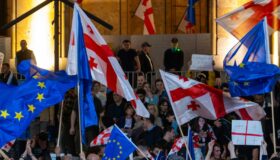
Between 2023 and 2025, Georgian authorities adopted over 25 legislative packages with profound implications for civil freedoms, most notably the 2024 Law on Transparency of Foreign Influence, the 2025 Foreign Agents Registration Act (FARA), and successive amendments to the Law on Grants. This legislative offensive was accompanied by a violent crackdown on peaceful mass protests against the suspension of EU accession negotiations in November and December 2024, involving excessive force, arbitrary arrests, torture and ill-treatment of participants, and widespread intimidation of activists, students, journalists and HRDs. Into 2026, this trajectory has shown no sign of reversal: from January to March 2026, the Georgian Parliament adopted further amendments to the Law on Grants, criminalising the receipt of unauthorised foreign funding, an escalation that drew condemnation from the EU and prompted the first-ever invocation of the Moscow Mechanism of the Organisation for Security and Cooperation in Europe (OSCE).
These developments have had severe knock-on effects across civil society. CSOs and media outlets have reduced or suspended operations, resulting in drastically diminished human rights monitoring, a sharp decline in service delivery for vulnerable populations, including survivors of domestic violence, LGBTQ+ individuals, and widespread psychological harm among HRDs.